When I first started this blog, I struggled with how to categorize my posts. I’m a big fan of sorting and organizing—if you’re here to read about topics related to creativity and inspiration, you may not be interested in my rambling about what a Gymnopedist is or the impact of Red Note on global political movements. The challenge of categorization, though, led to a new question that I’d frankly been avoiding: Who is my audience? What’s the use of making categories for readers’ convenience if I don’t know who those readers are?
I started with considering my existing readers, but that didn’t get me very far. I have a handful of friends who check on “Words, Words, Words” regularly, but the other engagement I’ve gotten has been from strangers who I imagine as creatives, musicians, artists, perpetual students, DIY enthusiasts, passionate hobbyists.
But I don’t JUST want to write for that audience. I want to express creativity here, sure, but I also want to share my other thoughts. For better or for worse, I like engaging with larger cultural conversations. I want to write for everyone! And that doesn’t mean writing vaguely, or in a placating tone—I want freaks, outcasts, the uncomfortable, the oppressed, and those who are constantly treated as a fringe audience to be my primary audience.
I like writing boring nonfiction that (let’s be honest) might appeal to maybe a handful of nerds. I don’t just want my audience to be the people I can think of. How do I balance being a “universal creator” with the realities of internet marketing? With SEO, keywords, and (most importantly, as everyone claims) a “target audience?” How do you craft the “everything-person” who’ll engage with all of your varied content, who’ll be as interested in poetry prompts as they are arguments for ghost hunting?
This isn’t just a “me” issue. A friend is looking to expand to their content to other platforms, and as I’m trying to offer support I’m becoming increasingly aware of my own limits. How can I ask someone else to craft their “ideal reader” in order to develop a marketing strategy when I’m struggling to do it myself? Sure, there are other ways to gather information. Looking at already successful creators’ content (hashtags, keywords, caption structure, etc.) can give marketing direction for similar enterprises. But more professional sources than I insist on the importance of building a character the way fiction writers would do establish an “ideal” patron.
I did what I often do when I’m unsure and lacking confidence: I poked through my personal library until I found a few relevant books. My verdict? Imagining, building, and celebrating readership requires unrealistic optimism and determined hope.
The first relevant book I found is one I picked up during my freshman year of college, titled The Craft of Research. (I never actually read it all the way through at the time, but the annotations I did leave were helpful—thank you, past me!) The whole book is a helpful resource, but I was looking for some specific advice. Luckily I found it near the beginning (lucky because, as previously stated, I never read the entire book).
Booth et al. (2016) suggest that you treat your audience like “scholars interested in greater knowledge and better understanding,” emphasizing that the writer should be “concerned with [their] particular community of readers” [parentheses in original] (25). That’s well and good, but then we run into the issue that plagues me, my friend, and other creatives who are avoiding exclusion—how do we imagine the individuals who make up that vague community?
I like the metaphor Booth et al. (2016) use of readers as passerby. “You must think of your reader as someone who doesn’t know it but needs to and yourself as someone who will give her reason to want to know it” [parentheses in original] (18).
This mindset requires that you take yourself out of your fantasy of creative solitude, temporarily casting off your role as a writer (or artist, or bedroom musician), and adopt the mindset of a street performer. What if you were preaching, dancing, or playing guitar on the side of the road? People will likely appreciate your efforts as they walk by, but how many will actually stop? If you only play to reach the specific people who are the type to stop, there’d be little point in playing at all. Sure, market strategy suggests that we flesh out those people who’d stop, but realistically, you’re playing for everyone else, too—even those who don’t think they need whatever you’re presenting to them.
Another book I found helpful was They Say/I Say by Graff and Birkenstein. Opposite of performance, they describe the role of a reader as being in conversation with the writer. A conversation?! Now we aren’t just thinking up our own words—we’re thinking up words said by a (still difficult to picture) reader!
Graff and Birkenstein suggest that we (as writers and readers) “imagine the author as participating in an ongoing, multisided conversation in which everyone is trying to persuade others to agree or at least to take his or her position seriously” (175). But that requires a scary amount of faith in your audience. Our perfect reader doesn’t exist, and our general reader will likely have different responses to content than the perfect reader.
When considering the public, feedback can be a scary thing (and can make or break a creative’s relationship with their audience). It’s one thing to receive feedback on a work in progress, but what about something finished, something that you’re proud of? I would be remiss to not think about who my readers might be in the context of the current political climate—how much am I comfortable sharing, on my website or on Substack? I unlinked my Storygraph from a past post because I was embarrassed about a book I was reading; how can I expect myself to write meaningful, vulnerable pieces if I won’t even open up my reading list for discussion?
The answer lies in that unreasonable optimism and determined hope we talked about earlier—you have to trust the reader to look “not just for the thesis of a text in isolation but for the view or views that motivate that thesis” (Graff and Birkenstein 183). During a wave of anti-intellectualism and poor media literacy, I’m sure I’m not the only creative struggling with how to respond to general feedback after making your work available to the public (even if that feedback is only from an imaginary reader, because remember—we’re still developing an audience).
Every time you engage with the world it’s a conversation. Every time. And with a conversation, there are a few ways you can concretely prepare. Consider: who are you talking to? What’s your message? And with both of those pieces of information, how do you get across your point?
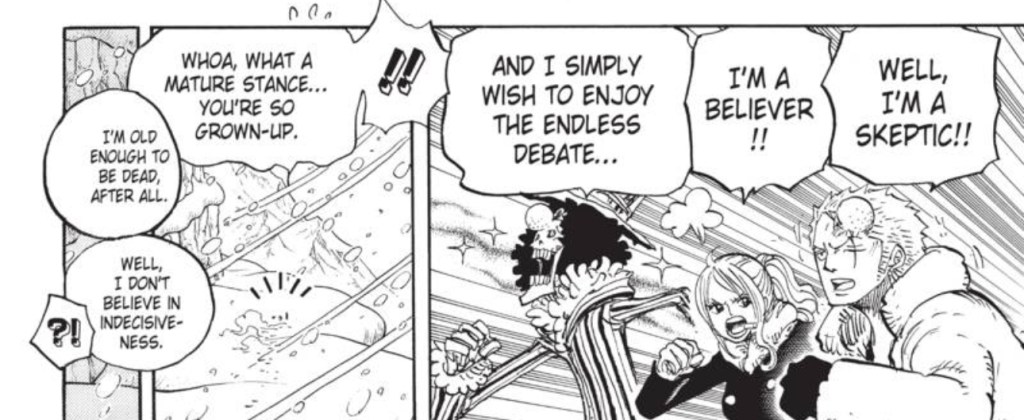
And here we go again, back to the issue of defining one’s audience, a task impossible despite the fact that it’s a key part of advertising in the age of mass media. Yes, yes, planning is needed. I get it. But (sometimes unfortunately) I’m a figure-it-out-as-I-go type of person. And so here I am, writing it out. This post is certainly a conversation—one with the potential reader, with the imagined audience, in mind. And that audience is a mystery. I know who I am, but who are you? And how can I appeal to you?
Realistically, I don’t know how to do that. There’s no way to make everyone happy. The Craft of Research suggests that “even if you don’t have [your goal] audience right now, you must write as if you do” (19). Being a “successful” creative, regardless of how you imagine that, means that at a certain point you have to break away from “reality.” The reality of business planning that tries to create a specific reader who, let’s be honest, doesn’t exist. But you have to imagine, because how will you find your target audience if you don’t even try to meet them?
And so I will write. And for the sake of my multifaceted (dream) audience, I will try to sort my writing, no matter how weird and purposeless it is, no matter if people read it or not (although being read is certainly the goal). So for my writing that’s vague, that’s not a prompt, that requires considering a more complex audience, I settled on the category title of “Conversations”. Ultimately, that’s what writing is. That’s what any kind of outreach to the world is. It’s a conversation. And I love to yap.
(And in the spirit of vulnerability and conversation, here’s the link to my Storygraph.)
 Vincent Boone-Banko
Leave a comment